
With its passage in 2021, Assembly Bill 101 made our state the first in the nation to make legislation requiring high school students to take an Ethnic Studies class to graduate. As maintained by the enacted law, the 2025-26 school year – the next one – will make the course available to the entire student population of California’s public schools. Representing some substantial updates to the way we teach social sciences across the state, the course is expected to become a statewide graduation requirement, according to Governor Newsom’s Office, in time for the 2029-30 school year.
However, for the Sacramento City Unified School District, Ethnic Studies will not be so novel. Being ahead of the California Department of Education in this regard, the district has long introduced Ethnic Studies as a required course in its high schools. This effort, started back in 2015, was pushed for largely by its students. Working with Sac State, CSU San Francisco, UC Davis and other California school districts, the SCUSD Student Advisory Council proposed in that year to usher in Ethnic Studies as a district requisite for graduation, viewing the course as essential to communicating the accomplishments and contributions of people of all races to American history.
To achieve this goal, they drafted up a budget, drew from other A-G required class structures, and collaborated with administration, district staff, and experts at the aforementioned universities to establish a curriculum that fit their mission intentions. By the 2016-17 school year, the newly established course debuted as an elective, and after pilot testing became an alternative required course to Contemporary Global Issues classes at SCUSD’s high schools. Then, from the class of 2023 onward, Ethnic Studies replaced Global Issues to become required subject matter in its own right.
Perhaps more than any other topic in education, Ethnic Studies is misunderstood and sensationalized, especially in the media. To get to the truth and to see what this decision means for our state, let us discuss Ethnic Studies’ history, its content, its opponents, and its standing amongst educators and students alike.
California’s Special Connection
In academia, the actions of SCUSD students and California’s statewide decision reflects the greater history of Ethnic Studies, one that’s been rooted in this state since the late sixties. During this time, students of color at universities such as San Francisco State College recognized the need to re-evaluate the way American history was taught in higher education, which was simply centered on the stories and actions of Europeans and white Americans.
This framework depicted minorities and people of color as simply token and nameless figures, consigned to play sideparts as victims in the long history of imperialism, colonialism, and slavery. The harm in this was that these brief, off-hand references to people of color in what was seen as a “white man’s history” were not adequate or complete representations in the least. Seeing that the depth of their experiences and the experiences of other African-, Chicano-, Asian- and Indigenous-Americans like themselves were not reflected by the prevailing curriculum, students in the Bay Area began to pressure college administration to create an Ethnic Studies program.
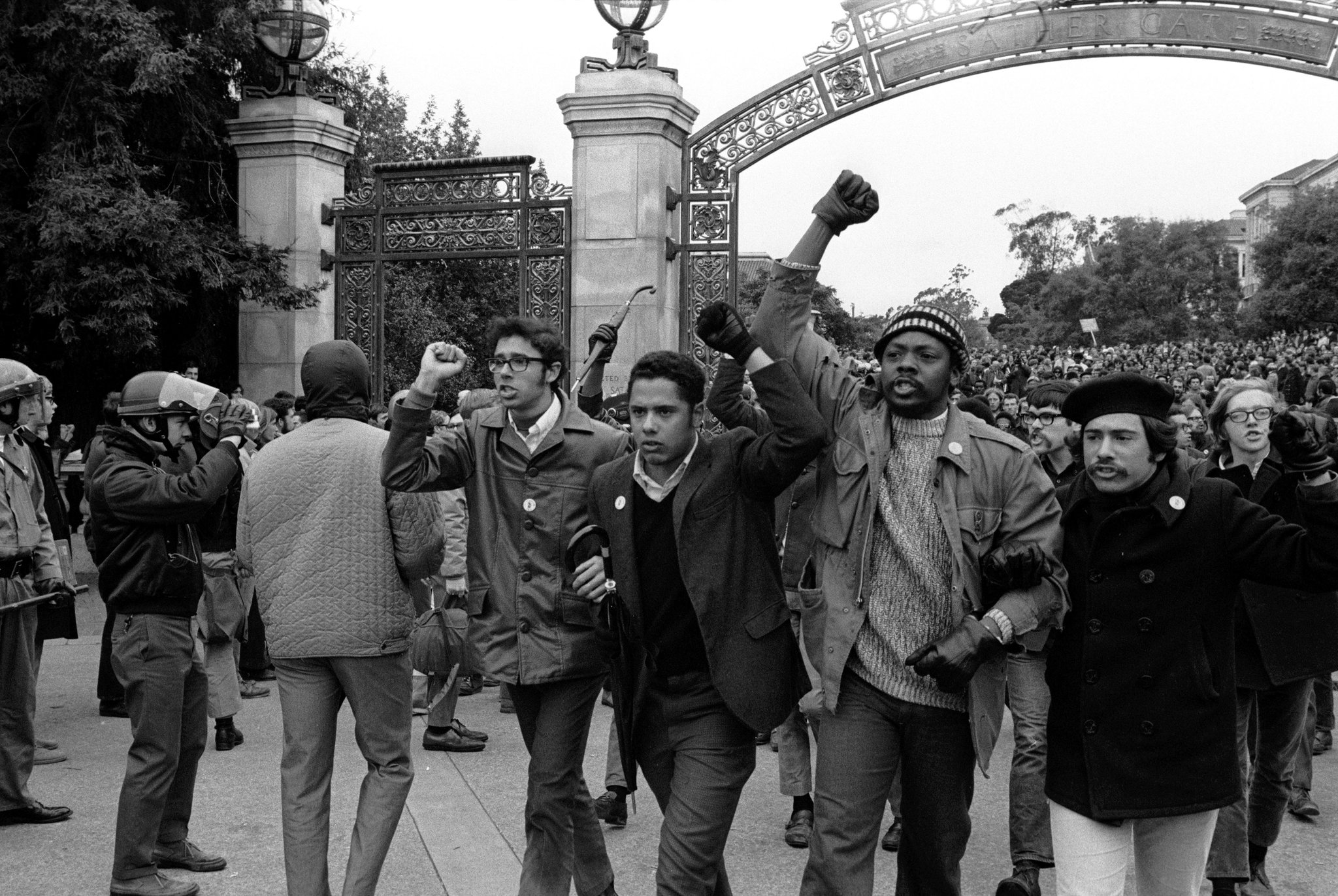
After a few years of administrative inaction and indifference toward their demands, these students organized. Joining together as part of the Third World Liberation Front, students, faculty, and certain administrators commenced a strike on November 6th, 1968. Frequently harassed, injured, or arrested by police, these protesters held firm, and on January 22nd of the following year, their ranks were swelled by the addition of student-activists and staff at UC Berkeley, who joined the strike. Combined, their historic efforts put pressure on the colleges to consider their demands.
After 5 months, the strike terminated on March 21st, 1969, with the colleges agreeing to establish their own Ethnic Studies programs. Such programs would, for the first time, offer degrees in African-American, Asian-American, Native-American, and Chicano Studies.
These successful campaigns led by young activists at SFSC and UC Berkeley pressured other universities, like UC Davis, to follow suit. Thus began the gradual expansion of Ethnic Studies in America.
Since the region we live in was at the epicenter of such monumental actions, it is no doubt substantial that Ethnic Studies be introduced to high schoolers in the area as well. Many recognize the special meaning such an introduction has.
Unmistakably, this feeling is not lost on Shawnecee Schneider, who’s been teaching Ethnic Studies at this school for two years: “We’re so close to it that it feels really special to be able to teach it.”
What, Exactly, Is Being Taught?
Today’s Ethnic Studies programs, including the one taught here at West Campus, heavily honor this tradition of homegrown activism. Reminding us of this legacy, Jesse Hutchison, an Ethnic Studies teacher here at West, touches on the fact that college-level Ethnic Studies is primarily an “activist-based thing” – a pathway through which degree-holders “can try to help their communities.” And this is an idea which he hopes to impart in his high school classes.
Along with this sentiment, the Ethnic Studies course adopted at West Campus was “designed with the consideration that race and racism have been, and continue to be, profoundly powerful social and cultural forces in American society,” a quote which comes directly from the school’s website. It goes on to describe the aims of the class, which are to educate students of all races on the history of marginalized groups and develop students to become more “politically, socially, and economically conscious about their personal connections to local and national history.”
The educators I have spoken to all concurred that these aims are solidly important ones. In addition, they attest that the course should be a requisite for graduation, with Mr Hutch even suggesting that “one semester [of Ethnic Studies] is not enough.” Because of the size and importance of the subject matter, such a limited time frame means Ethnic Studies can’t always capture every topic it intends to in full depth. And its importance lies in the fact that there is not much else like it in the American education system.
Unlike your general history class, Ethnic Studies adds perspectives that are too often cast aside in favor of euro-centric narratives. While we frequently learn about topics such as colonialism and imperialism later on in World and US History, Ethnic Studies dissects these events through the lenses of those they impacted and connects it with the world of today. As Ms. Shawnecee explains, “[Ethnic Studies] sets students up for success in a way, because understanding systems of power, identity, and struggle sets you up to really have better analysis or a better depth of understanding for imperialism, colonialism, and what has shaped the course of history and peoples’ experiences in history.”
As Mr. Hutch points out, Ethnic Studies provides students with key opportunities. Most of all, it exposes them to “a broader history of the United States,” one that isn’t one-dimensional or dismissive of its own mistakes. Even further, the class “gives students that don’t have a euro-centric background an opportunity here to learn that their story is equally as important.”
At the beginning of the year, it also gives students the tools to understand their own identities and the things that shape them as an individual, such as gender, socioeconomic status, and race. In the words of Ms. Shawnecee, “Ethnic Studies asks you to do some internal reflection,” which “is not a tool that is used enough in society and conversations” in America. And this reflection and acknowledgement of where we are all coming from can build empathy with those around you, she feels, providing the conditions for positive growth.
Notably, another valuable skill that Ethnic Studies aims to teach students is how to recognize bias in documents and the reasons for such biases. As part of the class, students go through a number of different sources on a single topic. They research the author and predict the likely audience of each source to make decisions on their respective credibility. The result of such methods are presumably to develop students’ awareness of all forms of bias in our media and the press. In a country like ours, passing forward these critical thinking skills should be viewed as invaluable in developing an aware and free-thinking population.
Overall, the words interviewees most attributed to Ethnic Studies were “opportunity”, “community”, and “growth.” And it is from these words that we can see that Ethnic Studies is as much about the problems of the past, as it is about the problems we face today. But within this understanding lies the opportunity for problem-solving in our communities – which is to say, real growth. These ideas which drive the curriculum of Ethnic Studies all seem to be essential and positive aspects that we should communicate to our children.
One would think that equipping all students with empathy, awareness, and a consciousness of the sides of history that aren’t normally included in other classes would be something to get behind. However, for some, this is not the case.
The Pushback
In places across the United States and in sections of our native California, there are sizable groups of people who are vehemently opposed to this curriculum or at least “Ethnic Studies” in name. Within town halls and school board meetings across the country, some angry parents have raged against Ethnic Studies programs, describing them as “divisive” and equating them with “forced indoctrination.” In some areas, these individuals have been especially effective in shutting down or limiting Ethnic Studies programs in local school districts and even on a state level.
Back in 2010, Arizona became the first state to ban the teaching of Ethnic Studies, alleging that the curriculum advocated for government overthrow, promoted “ethnic solidarity,” and was meant for only certain groups. The law they passed, HB 2281, forced minority studies out of the schools in a state that is over thirty-one percent hispanic and six percent indigenous. Their decision to shut down the Mexican American Studies program that had been running in places like Tucson since 1998, also pressured that school district to ban over fifty books pertaining to the history and human experiences of ethnic minorities in America. Ranging from local Chicano history books like Los Tucsonenses: The Mexican Community in Tucson, to Howard Zinn’s Voices of a People’s History of the United States, these books’ removal curtails the representation of ethnic groups in the state.
Tom Horne, the superintendent of Arizona schools who personally pushed for this anti-Ethnic Studies bill, alleged that “Ethnic Studies in Tucson divided students by race. African American students to classroom 1, Mexican American students to classroom 2, etc., just like in the old south.” And while this bill had been ruled unconstitutional by a judge in 2017, it was recently upheld by a U.S Circuit judge.
In Florida, as well, Governor Ron Desantis’ administration blocked College Board’s addition of AP African American Studies, claiming in 2023 that the course “significantly lacks educational value.” In addition to alleging its worthlessness, parents and political pundits have boldly stipulated that Ethnic Studies trains kids to hate America.
Mr Hutchison, who has encountered similar opposition to Ethnic Studies at other schools, notes that such resistance often materialized from parents “who were unsure about what it is or were under the impression that I was trying to condition students into being a part of some anti-American cult, which is not the case.” Here he offers his explanation for such strong reactions to Ethnic Studies curriculum: “People generally try to avoid feeling guilty about stuff, so when things [like white supremacy] are talked about, they’d rather pretend like it’s not there so they can avoid that discomfort of learning or having to deal with those topics.”
“There’s this concept that if we understand our history, it makes you hate our country,” suggests Ms. Shawnecee. To her, this conception entirely ignores a main tenet of Ethnic Studies – that there can be growth, acceptance, and love in America. However, this prospect hinges on us Americans leveling with where we are at today, with the knowledge of where we have been before – which is to say that Ethnic Studies is needed.
And to those who disparage Ethnic Studies on the basis that it makes certain students feel uncomfortable, both educators frankly respond that some level of discomfort is to be expected. “It should be uncomfortable,” says Hutchison, explaining that recognizing historical and present mistreatment of minorities by the majority may not exactly be pleasant for anyone. However, he believes that addressing the long prevailing narrative of ignoring such history is necessary in getting to a more positive place of common ground. “You have to have that growth and growth isn’t comfortable.”
Knowing how educators feel, to find an even better indication of the educational value and impact of Ethnic Studies, let us look at how it is viewed in the eyes of the students who have taken it.
How West Feels
In interviewing students of all backgrounds about Ethnic Studies, the general response here at West Campus appears to strongly refute the claims of “concerned” parents and politicians like Tom Horne. Indeed, every one of the students I interviewed recognized and spoke for the value of Ethnic Studies classes on both a personal level and in a wider view. Their accounts communicate that the course is generally well liked by our student population.
Moreover, interviewees reported the class to be very beneficial and thus, in their opinions, necessary. Megan Wong (10), who took the class last year, feels that it is “crucial for teens (who will soon be eligible to vote and participate in the economy)” as it provides a “first exposure” to the history of ethnic, cultural, and political currents in the nation.
Further, students found the class to be unique in many ways. Sharing what he liked best about Ethnic Studies, Amine Abadli (10) states that it appealed to him because it “engaged you and taught you about issues that are hardly talked about, as they go under the radar.”
“Unlike a traditional history class, it was a lot less eurocentric. It focused on perspectives usually ignored,” says Terry Porath (10), who enjoyed learning about different groups in Ethnic Studies for the very reason that he “had not learned about them prior.”
In the words of Paige Perez (9), a freshman who is taking the class this semester, “Ethnic Studies helps students become more comfortable while working in diverse groups.” And, as Audrey Savengsueksa (10) suggests, this aspect of the class “can help foster empathy and awareness for social issues present in our society today.”
Now, contrary to the depictions of Ethnic Studies as “indoctrination”, many students here at West attest to a large level of transparency and freedom of thought in the course, which they felt made it more enjoyable. Some even pointed to this as a large reason for their success in the class. To Anneli Gurtis (10), “the freedom to pick what to focus some of your essays on was helpful” because she “was able to dive deeper into topics that hit closer to home.” As part of this learning process, students are not simply told what to write, let alone how to write it. They are presented with an array of primary documents and other resources of which they are given the liberty to process individually. According to students like Gurtis, this method of teaching delivers.
Speaking of delivery, students also singled out some takeaways from their experiences with Ethnic Studies. For Diana Camacho (10), a key realization was that “there is power in your community” and “everyone makes an impact.” Also walking away with a sense of unity and connection, Megan Wong says she learned just how much “everyone’s story is intertwined. You cannot understand one group’s experience without looking at how they overlap with others.”
After taking the class, senior Kate Searle (12) left valuing the concept of awareness much more. To her, it became clear that being aware of social issues and mistreatment of certain groups “allows you to be able to take action, understand, and respect the cultural practices of other cultures.”
For many kids, taking the course and gaining more awareness unlocked new ways of thinking. This was true for Camacho, who notes that “Ethnic Studies opened my eyes to different stories and gave me the pattern recognition to see them repeat in modern events.” Likewise, the knowledge in analyzing historic trends and detecting bias which is delivered through Ethnic Studies, remarks Dylan Fail (10), “can all be applied today.”
In many cases, students drew inspiration from the source material and carried over what they learned from Ethnic Studies into their present lives. As many who participated in West Campus’ February 28th walkout can attest, several skills built in Ethnic Studies played a crucial role in enabling our school’s students to make the conscious decision to protest, and more importantly, to know what they were protesting about. As Diana Camacho explains, “being told you can do something is different, but hearing that someone else already has makes your goals seem realistic and gives you the final push to act.” And act, students do.
So regardless of the pushback from individuals at town halls or on the air, most educators and students understand and seem to grasp the purpose of the subject matter in Ethnic Studies. As a matter of fact, Anneli Gurtis may just provide the ultimate clarity when she states: “By no means would I call it sunshine and rainbows material, but at the end of the day it makes humanity seem a little brighter by instilling students with a sense of self and purpose.”
As their testimony suggests, students recognize that Ethnic Studies may be uncomfortable at times, but even they believe that it doesn’t make the course any less pertinent. It is with this understanding that courses on Ethnic Studies are introduced in California’s public school – with the goal to show that all students’ contributions mean something.