In California, the Civic Learning Task Force conducted a survey of 2,366 high school seniors that revealed that just 60 percent could correctly answer questions designed to test their knowledge of current political issues and the structures and functions of government. That is a serious problem that many school districts in California face, yet, like other issues, they are doing nothing to solve or improve it.
Civic Education is more than Political Education, it is insight on how the government works, and how to be a more informed voter. Civic Education teaches future-voters, especially High Schoolers their rights, how they participate in democracy, and the inner workings of government at local, state, and the nation.
The problem with the lack of civic education is, these same individuals who lack proper education in government, are making uninformed voting decisions in elections at those same three levels of government. These small decisions can affect people everywhere, and it goes to show that education makes a big difference.
Civic Education and Election Season
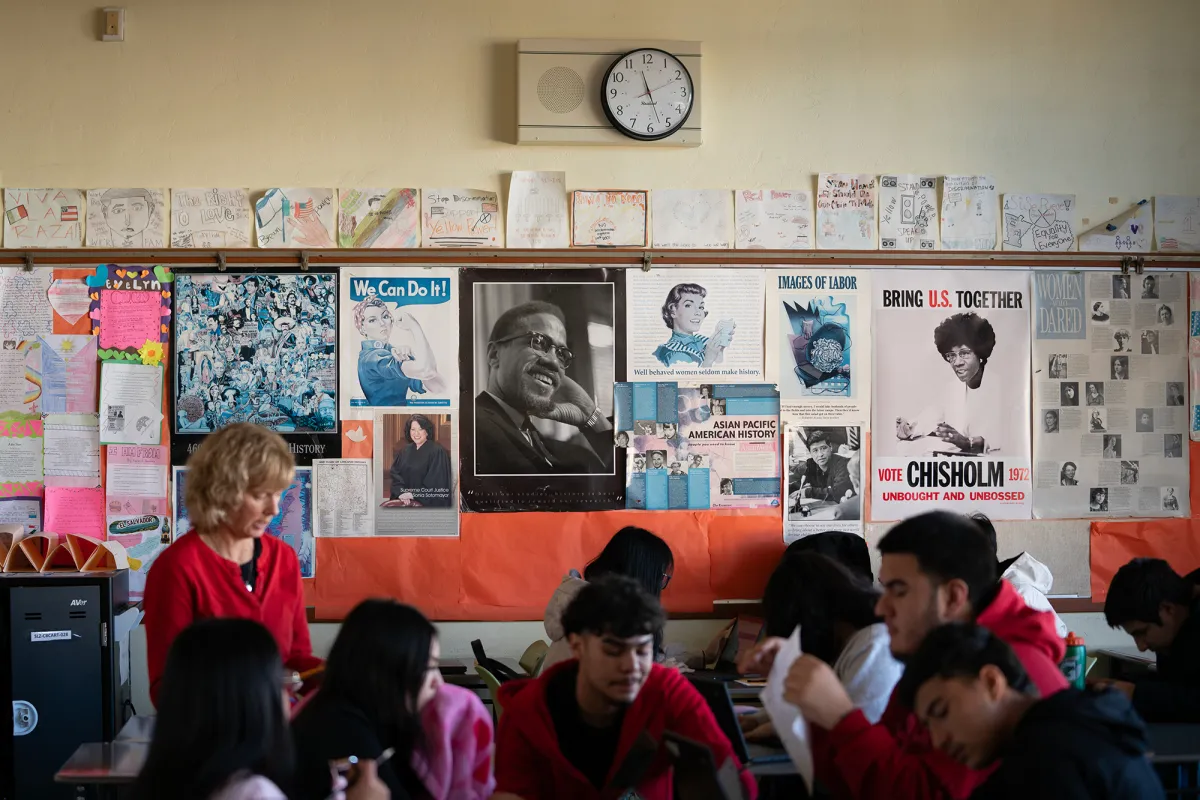
In the 2024 Election, some seniors at West Campus had the opportunity to vote, while taking civic learning classes such as Government & Politics and AP Government & Politics.
Due to them taking the class, they felt well-equipped with knowledge of the democratic process and even were able to understand specifically the importance of their vote. However, this may have been too late for some students.
“For me, taking AP Government helped me to understand specifically the importance of my vote as well as what trends or patterns affect people’s voting preferences.” One Senior says. “I was able to identify political strategies used by candidates to swing voters.”
Another Senior agreed, stating, “Although I did understand the importance of my vote when it was time for the election, I wish I had taken the class sooner, as I learned more after the election during the semester about the democratic process and why participating in it was so important.”
Classes like Government could be taught to late for some seniors. Right now, Civic Education is only available to Seniors who need it for a graduation requirement. When it is taught, it is brought on to them all at once, not taught earlier in their educational pathways where fundamentals on the subject are introduced.
Instead of thrusting Civic Education on Seniors all at once when they are only just about to vote, Civic Learning should be introduced earlier, and built upon as students go on through school. With this pathway of introduction and building upon subjects, students should be well-equipped with knowledge about the United States’ democratic process and would be able to actively participate in their governments with necessary education on the topic.
“Taking the class sooner would’ve helped me when voting. It taught me a lot about my own personal rights as a student on campus and had made me more aware of policies that can affect students in the future.” says Kylee Vuong, a Senior at West Campus.
Civic Education is a topic that needs to be built upon, just like any other subject, like Math, English, or Science. Decisions that you make in government have a very real impact, and therefore very real consequences.
California, and Sacramento City Unified, could be doing so much better.
In other statistics by the Civic Learning Task Force, less than half of California high school seniors participating in the same survey viewed being actively involved in state and local issues as their responsibility.
The problem, could be found in the quality of civic education.
Forms of Civic Education are classified as social studies, and most social studies classes that are not apart of the Advanced Placement Program are taught based on what the class instructor chooses to teach. This means that if the teacher is teaching a social science they have no experience in, they will teach what they think the course is about, not what the course actually is about.
This problem could be easily solved with districts supplying teachers with hands-on civic learning curriculum that will be appealing to students and that will inspire them to be more involved.
What students need are classes that they can take something away from, not classes that they feel like they have to take because it is a graduation requirement.
At West Campus, we can see students taking classes because they like the topic, and it can be considered very effective. “I took AP Gov because I thought it would be a great class to learn about how our country runs and that it would be extremely fun to take since Ms. Scott is an extremely knowledgeable teacher, considering the did go to law school and pass the bar exam.” says Kylee Vuong.
When teachers make lessons and education a good experience, students retain information and they are able to apply the information from that class into their daily lives.
Also according to the Civic Learning Task Force, California’s current K-12 civic education too often emphasizes memorization over participatory skills and experiential learning, does not assess whether students are prepared for their roles and responsibilities as residents and citizens or the degree to which schools an districts provide students with the learning opportunities that promote the desired civic outcomes, and rely too heavily on a single American Government class in 12th grade that comes too late for the many students who have already dropped out.
Students are not engaged in Civic Education because it is not taught correctly to them. They do not understand the true purpose of Civic Education or the importance of the application of Civic Learning into their day-to-day lives.
“Failing to correct these problems is harming our state and nation.
We can and must do better.” says the Civic Learning Task Force Final Report.
The Equitability of Civic Education and Funding of Civic Learning
In the study by the California Civic Learning Task Force, existing high-quality civic learning opportunities are not equitably distributed. Despite a shared interest in engaging in civic life, just a subset of students—typically those who are white, of high academic ability and of higher income families have access to quality civic learning opportunities, such as service learning, simulations of democratic processes and discussions of current events and controversial topics.
Due to funding of programs being distributed by school districts, and districts being funded by taxpayers, most districts are not as rich because of the areas they are in.
The Sacramento City Unified School District (SCUSD) receives funding from local, state, and federal sources. In the 2016-17 school year, the district’s revenue was approximately $665.7 million, with 26.2% from local sources, 61.0% from state sources, and 12.9% from federal sources. Which may seem like alot, but it is not within context. When spread across staff, students, and schools, it is not as much as it appears.
Due to the district spending money on other programs and not having a focus on civic learning, it is often overlooked and not given to students of diverse low-income backgrounds.
The Overall Lack of Civic Education
I recently had the opportunity to attend the Civic Learning Summit in Sacramento. At the summit, attendees listened to strong testimonials from students involved in Civic Learning.
A common thread pulling all these students together was the lack of Civic Education in their schools.
The reason why most of them had been at the summit was to learn about their government and connect with legislators, professionals, and most importantly their peers. Most students came to learn about what Civic Education was, and why it means so much for the future voters of America.
“I attended because my school doesn’t offer government learning, and it’s something I am really interested in.” One attendee says. “I wish there were more opportunities like this for Californian students. I learned so much these past two days. Although we cannot vote, this is how we become active in our communities, and our government.”
How to Fix This Growing Problem
The United States recently ranked 139th in voter participation of 172
democracies around the world.
If we reform our education, we can change that. Seniors in High Schools today do not understand their government because they are not given the opportunity to learn about civic engagement well enough.
When you have uneducation of important topics that affect more than just one person, problems arise. It is up to officials at the school board, local, state, and national level to make change.
Civic learning is about creating positive change in the communities that you serve. The officials we have in power today can do that.